Dripper: how it really feels weeks later
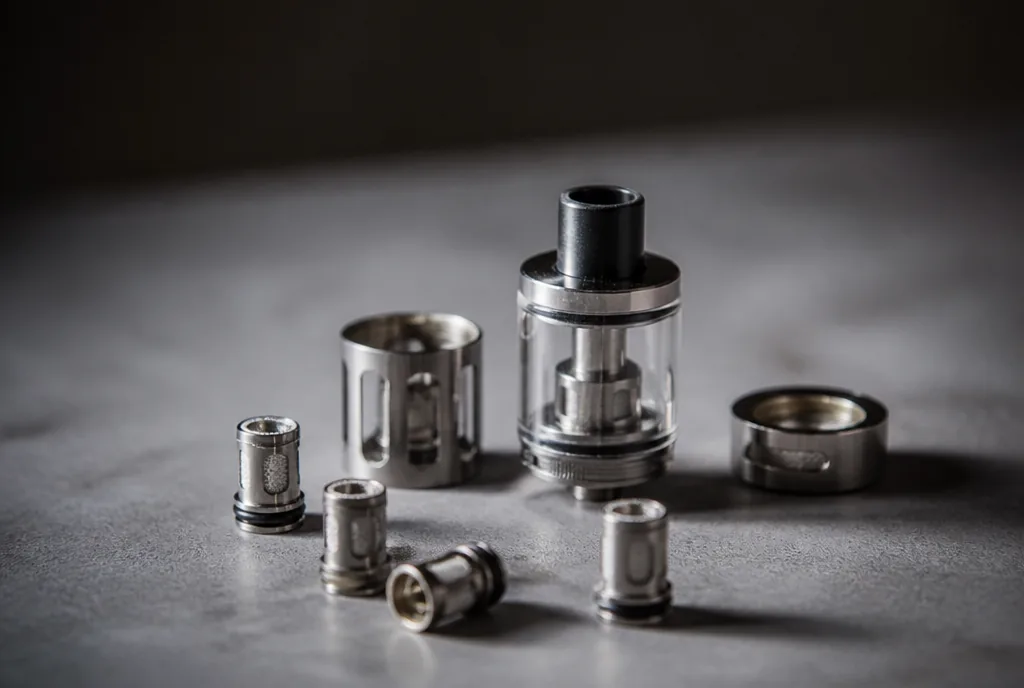
The first few pulls on an atomiser with no tank rarely leave anyone indifferent. Flavour arrives sharper and more immediate, and the sense of finally holding proper kit does the rest. The real question is what things look like three weeks on, when the dripper has to share a working day with a train journey and dinner at a friend’s house.
What a dripper gives once the novelty has worn off
A dripper, listed by most British shops as an RDA or rebuildable dripping atomiser, is a rebuildable with no reservoir. Liquid goes straight onto the cotton, a few drops at a time, which is what produces both the early enthusiasm and the reservations that follow.
Published feedback converges neatly. The aromatic result stays superior over the long run, but comfort in use degrades the moment the day turns mobile. The question after a few weeks is never whether it vapes well, it is whether you still take it out of the house.
That distinction matters more here than it might elsewhere. With refillable tanks capped at 2 ml in the United Kingdom, a fair number of vapers arrive at rebuildables looking for something the regulated hardware cannot give them, and then meet a set of constraints nobody warned them about.
The first weeks: what genuinely wins people over
Three sensations come up systematically in user reports, and between them they explain why very few people abandon the format entirely even after demoting it to a sitting room device.
The first is aromatic density. With no tank wall, no long chimney and no intermediate plastic, liquid travels from wick to mouth over a very short distance. The difference shows most on complex profiles, where secondary notes come through clearly, and it is the point on which opinions diverge least.
The second is control of heat and volume. An open deck and generous airflow let you tune the balance between the two precisely, and users describe a livelier vape, more responsive to the smallest change in power. That responsiveness has a price: the build forgives far less than a factory coil.
The third is freedom in the build itself. Changing wire, altering the number of wraps or repositioning the legs produces an immediate and audible effect. Many describe that permanent adjustment as the real reason they stay with the format year after year.
What starts to weigh on daily use
The frictions rarely appear in the first week. They settle in once routine reasserts itself and the device has to keep up with the day rather than the other way round.
The re-dripping rhythm comes first. Specialist buying guides put the interval somewhere between three and ten puffs depending on cotton quantity and the power in use. Everyone absorbs the gesture as an automatism, and the problem is never the gesture itself but its incompatibility with occupied hands.
Reports describe the bottle left at the office, re-dripping in a queue, drops landed on a keyboard. The constraint is small, but it comes back several times an hour and it never really fades.
Carrying it is the second issue. A soaked deck and a device lying flat in a bag do not mix. Vapers describe liquid coming up through the airflow, marks in a jacket pocket, and the habit of always transporting the thing upright.
Deck maintenance is the third. Liquid pooling in the well under the coil dries and caramelises, so a regular pass with a cotton bud becomes necessary, done cold with the device apart. The good news is that the wick pulls out and the whole assembly goes under warm water without removing the coil, which makes the job far quicker than it sounds. Drying it fully before rebuilding is the only real constraint.
What the squonk format changes about living with a dripper
Part of the criticism above disappears with one particular configuration, still thinly covered in general buying guides. It deserves to be known before anyone gives up on the format.
Squonk drippers, also listed as bottom feeder or BF models, are drilled under the positive post and mount on a mod fitted with a squeezable bottle. A press on the bottle sends liquid straight under the cotton without opening the top cap at all.
The lived experience changes completely at that point. No cap to remove in public, no dropper bottle to produce, and a much calmer journey home. In exchange you commit to a dedicated mod and a narrower choice of atomisers, which is the least discussed trade off in the category and often the most decisive one.
Cotton is the real marker of time
On this type of atomiser, wear is not measured in weeks but in cotton changes. It is the only reliable way to place yourself on the timeline.
Users describe a gradual drift: flavours thicken, a faintly toasted background appears, then definition returns the moment the wick is replaced. The wire itself cleans dry and lasts considerably longer than the cotton around it.
The body of the atomiser, almost always fully metal, barely wears at all. Specialist guides allow one exception to that rule and field reports confirm it: the screws holding the coil eventually mark from repeated tightening, which is worth checking before blaming a build.
One technical point recurs among experienced users. Cotton packed too densely slows liquid coming through and produces a burnt note that gets wrongly blamed on power. Reducing the fibre solves it more often than dropping watts does, and the mouthpiece sitting above an open deck picks up more condensation than anywhere else, with the wear marks vapers report on a mouthpiece over the weeks.
Who this format actually suits over time
Feedback draws a fairly clear split in use, and it does not follow expertise so much as lifestyle. Recognising yourself in one of these lines saves a lot of money and shelf space.
- Home based vaper, mostly vaping indoors: the format stays relevant for years.
- Mobile vaper with no squonk setup: the device usually ends up in a drawer.
- Flavour and build enthusiast: the constraint is accepted without argument.
- Someone who wants simplicity first thing in the morning: a pod quickly takes over again.
A good number end up running two configurations in parallel rather than settling on one device, often pairing an open deck at home with something regulated for the commute, such as a mod chosen for its durability.
Frequently asked questions
Does this format use more liquid than a tank?
Reports point that way, without any reliable ratio being available. Consumption depends mostly on the power used and on the diameter of the coil fitted.
Can it be left built for several days without vaping?
Yes, but the cotton dries out and takes on an unpleasant taste. Most users prefer to remove the wick before a longer period of inactivity.
Does the sound of the draw change over time?
A new whistle usually signals a top cap seated badly or a gunked airflow seal, rather than genuine wear on the atomiser itself.
Does the build need redoing at every flavour change?
The wire cleans dry and gets reused. Only the cotton has to be replaced to start again from a neutral base.
Is there any point to this format at low power?
Some narrow chamber models work very well on a restricted draw. The idea that you have to vape hard to get anything out of one is contradicted by a great deal of feedback.
Keeping a dripper in daily use: what real habits show
The picture that emerges is consistent. The aromatic result holds its promise over time, the re-dripping constraint never truly fades, and squonking is what most often decides whether the thing survives as a mobile device.
A dripper kept in service for months is nearly always one whose constraint was accepted from the outset, not one somebody hoped would quietly become invisible. That is what makes the format instructive, and why it sits so well alongside the rest of our impressions: it forces you to look at your own habits before you look at any specification.
Editorial content for adult readers only. Vaping products usually contain nicotine, a substance that causes addiction. Not for sale to under-18s in the United Kingdom. This article is not a buying recommendation.
Keep reading
Voopoo Drag X3: what it becomes months later
The Voopoo Drag X3 months in: pod and coil wear, charging port, fire button, removable cells and consumable supply. What to watch, and what to check first. Feedback d'Usage
 Innokin Klypse: what living with it is like
Pods, the magnetic cap, auto draw, VG ratio: what reported use actually says about the Innokin Klypse after several weeks in a pocket. Over time