Voopoo Drag X3: what it becomes months later
A product listing describes a wattage, a screen and a tank figure. It says nothing about what happens six months later, when the pod has been filled every day and the button has been pressed thousands of times. The Voopoo Drag X3, built around a cell you take out rather than a sealed battery, raises a different set of questions to a device you can never open. Those are the points worth examining before you buy, and while you own it.
What to watch on a Voopoo Drag X3 after several months
The starting point is not the headline power but the mechanical design. A pod mod running an 18650 or a 21700 cell you can remove shifts the whole longevity question. It is no longer a sealed battery quietly setting an expiry date on the product, but a set of mechanical parts under constant load.
Three areas deserve attention over time: the pods themselves, the fire button, and the USB-C charging port. Those are the repeated physical contact points, and they decide whether a device is still pleasant to use a year in or ends up in a drawer behind the spare cables.
British listings for this kit rarely cover any of that. They quote the power range, the touch screen and the tank capacity, all of which are settled on day one. The tank figure in particular is fixed at 2 ml on any refillable pod sold in the United Kingdom, so it never separates one device from another here.
How the pods and coils wear across the cycles
The pod on this kit takes replaceable coils, which changes the nature of the wear compared with a disposable cartridge. It is no longer the whole assembly that goes in the bin, only the coil, once the wick starts to fade.
There is a question worth asking before you order rather than at the checkout: how consistently are compatible coils stocked by British retailers, and under exactly which reference. A proprietary format that is easy to find today guarantees nothing about the next two or three years, and the vaping market has already seen coil ranges quietly disappear from shelves.
The pod shell itself deserves a regular look. Plastic that scuffs, or a seam that starts to move under the thumb, are signals to watch, because they often precede a leak rather than announcing one. Checking the seals each time you change a coil avoids an unpleasant surprise inside a jacket pocket.
E-liquid choice drives coil life more than anything else. Heavily sweetened profiles and dense flavour concentrates gunk a wick far faster than simple compositions, and that holds for almost every pod on the market rather than being specific to this one. Nicotine strength has no bearing on it, and in any case British bottles stop at 20 mg per millilitre.
The fire button and the charging port over time
On a device handled dozens of times a day, the fire button is the most mechanically stressed part on the chassis. It is worth testing in a shop if you get the chance, then keeping an eye on afterwards. Travel that goes soft, or an action that feels less crisp after several months, is ordinary wear on this kind of component whoever built it.
The USB-C port takes a near daily connection. A socket that gradually develops play is a common scenario on mods and pod mods handled intensively, without necessarily stopping the device from charging at all.
This is precisely where the removable cell format changes the picture. Charging the cell separately in a dedicated external charger spares the on-board port completely and moves the wear onto a part you can replace, rather than onto a connector soldered to the mainboard. The same reasoning applies across every device with a removable cell, and the feedback gathered on the Lost Vape Thelema range points to the same conclusion.
Removable cells: how to read a spec sheet before anything else
Taking a cell out of a device puts a responsibility on you that a sealed battery does not. The useful skill here is not memorising a number somebody quoted in a forum thread, it is knowing how to read the manufacturer datasheet for the exact cell you hold.
That sheet is published by the cell maker, not by the vape brand, and it states three things that matter: the chemistry and format, the maximum continuous discharge current the manufacturer specifies, and the recommended charging current. Anything a reseller wrap claims on top of that is marketing, and rewrapped cells are widely known to overstate figures. Work from the original manufacturer document, and match it against what your device asks of the cell.
A few habits sit above all of that and are not negotiable. Cells used together in one device should be a matched pair, bought at the same time and always charged and cycled together. The plastic wrap and the top insulating ring must be intact, and a nicked or lifting wrap means the cell is retired immediately whatever its charge state.
Spare cells travel in a dedicated case, never loose in a pocket or bag where a key or a coin can bridge the terminals. And the charger has to suit the chemistry and format you are using, which again comes back to reading the datasheet rather than assuming. A cell that runs unusually hot, swells, or loses its runtime sharply between two charges is taken out of service.
What grates in use, and what holds up on a Voopoo Drag X3
Some frictions recur across device formats regardless of brand, and they are better anticipated than discovered. The touch screen, pushed hard as the headline feature here, is one more component that can pick up scratches against keys or sharp objects sharing the same pocket.
The modular principle itself is what ages best. A device where the power source, the coil and the pod shell can each be swapped independently has structurally fewer reasons to be thrown away early than a sealed model. That is the single strongest argument for this format, and it holds up in the reports on how a Geekvape Aegis Legend 5 ages too.
Automatic power matching to the detected coil simplifies daily use considerably. What remains to be seen with time is whether that automatic reading still behaves once the electrical contacts have oxidised slightly after months of handling, a phenomenon that affects every pod with exposed metal pins.
Consumable supply: the question to ask before buying
A device can be beautifully designed and become unusable the moment its consumables leave the shelves. Before settling on a Voopoo Drag X3, it is worth checking current availability of compatible pods and coils across several British retailers rather than only the one you are ordering from.
A format carried widely by the main stockists offers a better guarantee of continuity than a niche reference. That is as decisive a criterion as the quoted power or the styling, even though it appears on no specification sheet anywhere.
Frequently asked questions
Does this kit take both an 18650 and a 21700 cell?
Yes, the compartment is designed to accept either format. That dual compatibility leaves you some room if one of the two becomes harder to source from British retailers.
Should a cell be replaced even while it still works?
A cell with a damaged wrap is replaced regardless of how well it seems to perform, because that insulation is what prevents a short circuit. Swelling, unusual heat or a sudden drop in runtime are equally clear signals to retire it.
Are the pods easy to find from British stockists?
Availability varies by retailer and shifts over time. Checking stock across several shops before buying is more reliable than judging by what happens to be listed on the day of your first order.
Is the touch screen fragile over the long run?
Published feedback does not report failures of the display itself. The point to watch is the protective window, which is exposed to scratching from sharp objects carried in the same pocket.
Can a spare cell be carried safely?
Yes, provided it travels in a dedicated case that isolates the terminals. Carried loose, a cell is exposed to accidental contact with metal objects and to the short circuit that follows.
Voopoo Drag X3: what time actually reveals
The removable cell format on a Voopoo Drag X3 moves the longevity question towards maintenance rather than towards an expiry date fixed by a sealed battery. Pods, fire button and charging port remain the three areas to watch as the months pass, while cell safety, intact wraps, matched pairs and transport in a case, stays a non negotiable reflex.
What separates a device still in service after a year from one abandoned at the back of a drawer is rarely written on the spec sheet. The same logic runs through everything else we cover over time: how hardware behaves in use tells you more than the figures quoted at the point of sale, and asking the right questions first avoids most of the disappointments.
Editorial content for adult readers only. Vaping products usually contain nicotine, a substance that causes addiction. Not for sale to under-18s in the United Kingdom. This article is not a buying recommendation.
Keep reading
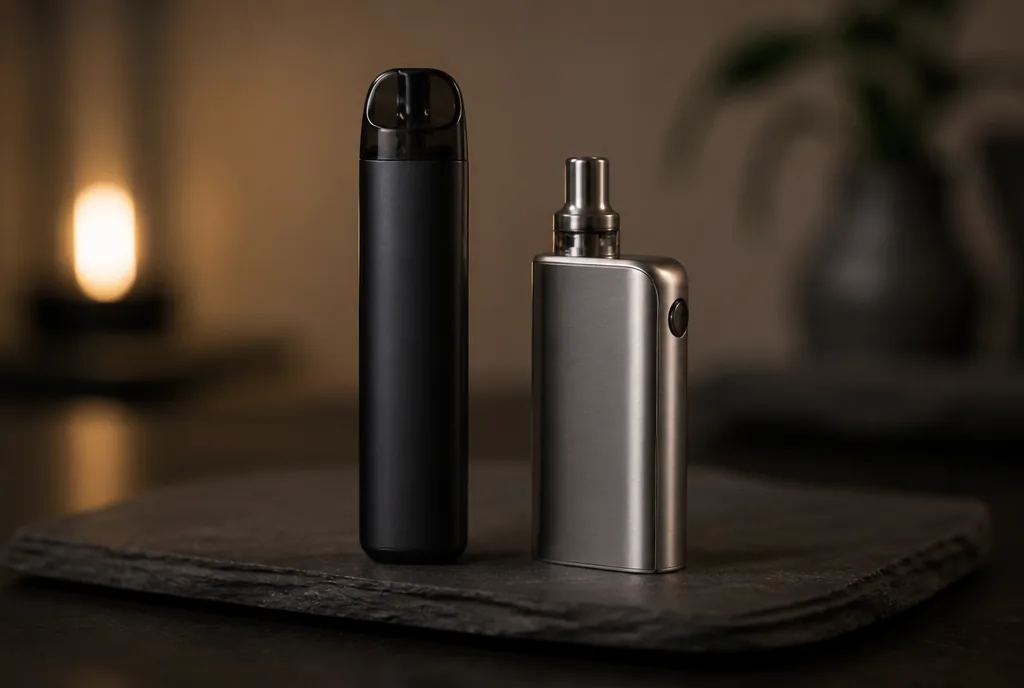 Over time
 Geekvape Aegis Legend 5: what lasts, what wears
Lock switch, LEDs, cells, the 80 per cent charge cap: what reported use says about the Geekvape Aegis Legend 5 once the first weeks are behind it.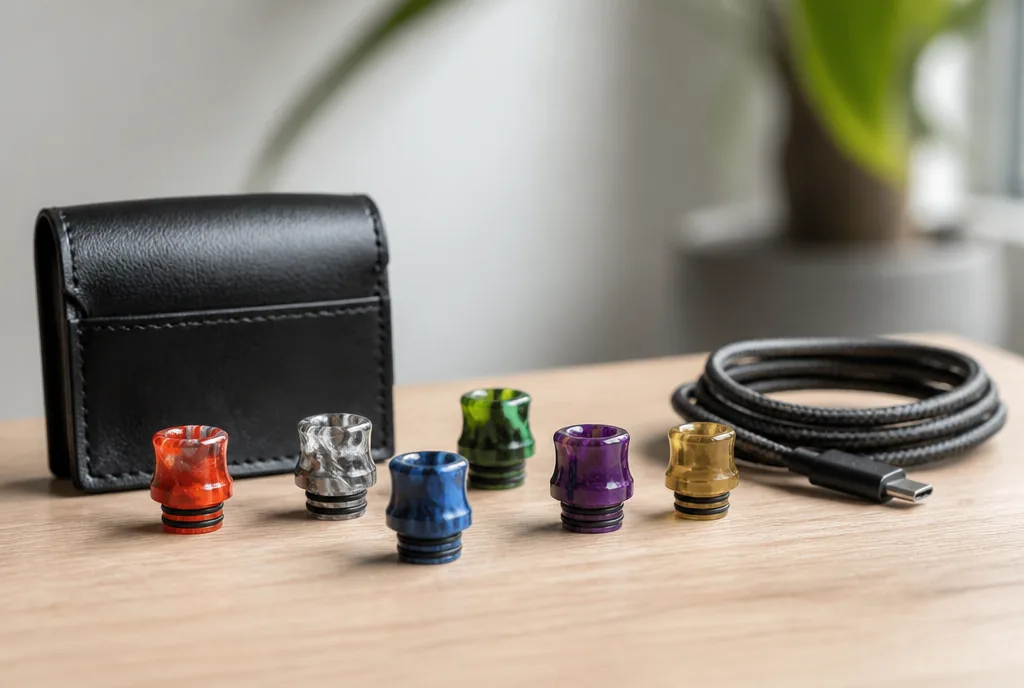 Over time
 Drip tip: what weeks of daily use do to it
A slackening o-ring, resin that dulls, a sticky film in the channel: what vapers report from a drip tip after several weeks, and when to replace it. Feedback d'Usage